Prophylaxis in chess
Twenty-seven juniors across two rooms, prophylaxis on the display board and the first Knockout results — with the Ladder tables after the day’s games…
Read moreTwenty-five juniors crossed the threshold today, another brilliant turnout and good to see Eden and Lewis back after a summer break. A warm welcome to newbie Julian, we hope he returns for more chess.
My thanks go to a full house of tutors today, Jon Catchpole, John Heath and Samuel, without this support it would be difficult for me to guide everyone.

Theme of the day was Opposition.
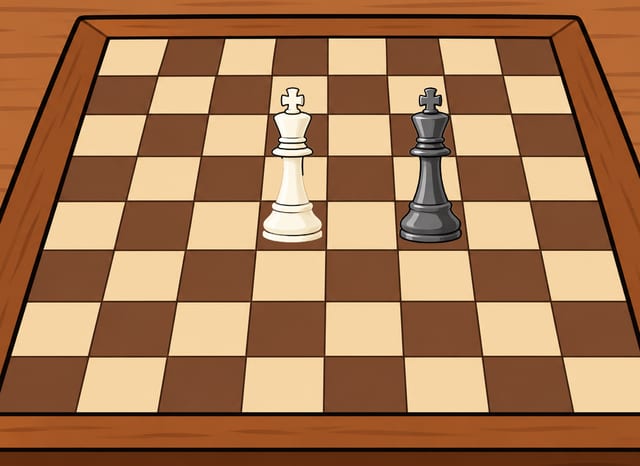
What is opposition in chess and particularly its importance in the endgame?
Opposition is when one king moves directly in front of the other, forcing the opposing king to move to the side or backwards.
This concept is crucial for advancing your position and is often used when you have a king and pawn trying to promote the pawn to a queen. By gaining opposition, you can force the opposing king to give way, allowing your pawn to advance and eventually promoting it.
For example, if it’s your turn to move and you move your king directly in front of the opponent’s king, that means you have the opposition, the opponent must move to the side or back for you to continue advancing. This tactic can be used to escort a pawn to promotion, ensuring victory. If the opponent’s king tries to stop your pawn, gaining opposition allows you to outmanoeuvre them and create a path for your pawn.
1. Kd4
            White takes the Opposition
        1… Kc6  2. Ke5
            this move prepares the path for the pawn on the d file
        2… Kd7  3. Kd5  Kc7  4. Ke6
            same pattern as before but closer to the 8th rank
        4… Kc6  5. d4
            now is the time to bring the pawn forward, remember not to push the pawn in front of it's own King until it queens
        5… Kc7  6. d5  Kd8  7. Kd6  Ke8  8. Kc7
            the white king steps aside away from the black king to allow a path for the pawn
        8… Ke7  9. d6+
            the pawn is safe now to go on to Queen
        9… Ke8  10. d7+  Ke7  11. d8=Q+
        1–0
Opposition is also critical in defending against a pawn’s promotion. By moving directly back when the pawn advances, you can maintain opposition and block the pawn’s path, forcing a draw if done correctly.
1… Ke5
            Black takes the opposition
        2. d4+
            Mistake - the pawn should not move in front of the King
        2… Kd5  3. Kd3  Kd6
            stepping back to see what white's next move is
        4. Ke4  Ke6
            taking the opposition
        5. d5+  Kd6  6. Kd4  Kd7  7. Kc5  Kc7
            repeating the same principles
        8. d6+  Kd7  9. Kd5  Kd8  10. Ke6  Ke8  11. d7+  Kd8
            if king to d6 it's stalemate = drawn game, if white king moves away from the pawn this allows black to capture the pawn = drawn game!
        12. Kd6
        1/2–1/2
This is especially effective with flank pawns, where the king can create a stalemate by moving to the corner. Understanding and utilising opposition can significantly enhance your endgame strategy, enabling you to convert winning positions.
Rooks — wins for Kieran, Oscar T, Henry N and Uzzaer.
Bishops — wins for Eden and Constance.
Knights — wins for Trisztan, Oscar F and Orson.
NB… With both Eden and Lewis, I am undecided which group to enter them, so for the moment they are in both Rooks and Bishops. Future games and results will help us to clarify which best suits their abilities.
Scoring is 3 points for a win, 2 for a draw and 1 for a loss.
| Player | Played | Won | Drawn | Lost | Points |
|---|---|---|---|---|---|
| Kieran | 3 | 1 | 2 | 0 | 7 |
| Jonah | 3 | 0 | 1 | 2 | 4 |
| Henry | 5 | 3 | 0 | 2 | 11 |
| Eden | 1 | 0 | 0 | 1 | 1 |
| Oscar T | 5 | 3 | 1 | 1 | 12 |
| Uzzaer | 5 | 2 | 0 | 3 | 9 |
Also in the Rooks, and yet to play a game in this group: Michal M and Lewis.
| Player | Played | Won | Drawn | Lost | Points |
|---|---|---|---|---|---|
| Constance | 1 | 1 | 0 | 0 | 3 |
| Rowan | 1 | 0 | 0 | 1 | 1 |
| Michal K | 1 | 1 | 0 | 0 | 3 |
| Tishi | 3 | 1 | 0 | 2 | 5 |
| Gagan | 1 | 1 | 0 | 0 | 3 |
| Arnav | 3 | 3 | 0 | 0 | 9 |
| Eden | 1 | 1 | 0 | 0 | 3 |
| Zayd | 3 | 0 | 0 | 3 | 3 |
| Wyatt | 3 | 1 | 0 | 2 | 5 |
| Lewis | 1 | 0 | 0 | 1 | 1 |
| Player | Played | Won | Drawn | Lost | Points |
|---|---|---|---|---|---|
| Jack | 4 | 0 | 0 | 4 | 4 |
| Lenaya | 3 | 1 | 2 | 0 | 7 |
| Otis | 3 | 2 | 1 | 0 | 8 |
| Seyon | 4 | 4 | 0 | 0 | 12 |
| Mason | 1 | 0 | 1 | 0 | 2 |
| Orson | 3 | 2 | 1 | 0 | 8 |
| Fin | 3 | 1 | 0 | 2 | 5 |
| Adah | 4 | 2 | 0 | 2 | 8 |
| Trisztan | 3 | 1 | 1 | 1 | 6 |
| Oscar F | 4 | 2 | 0 | 2 | 8 |
| Phoebe | 6 | 4 | 0 | 2 | 14 |
| Florence | 3 | 0 | 0 | 3 | 3 |
| Henry M | 3 | 0 | 0 | 3 | 3 |
Also in the Knights, and yet to play a Ladder game: Rupert.
Wins today for Fin, Rowan and Uzzaer.
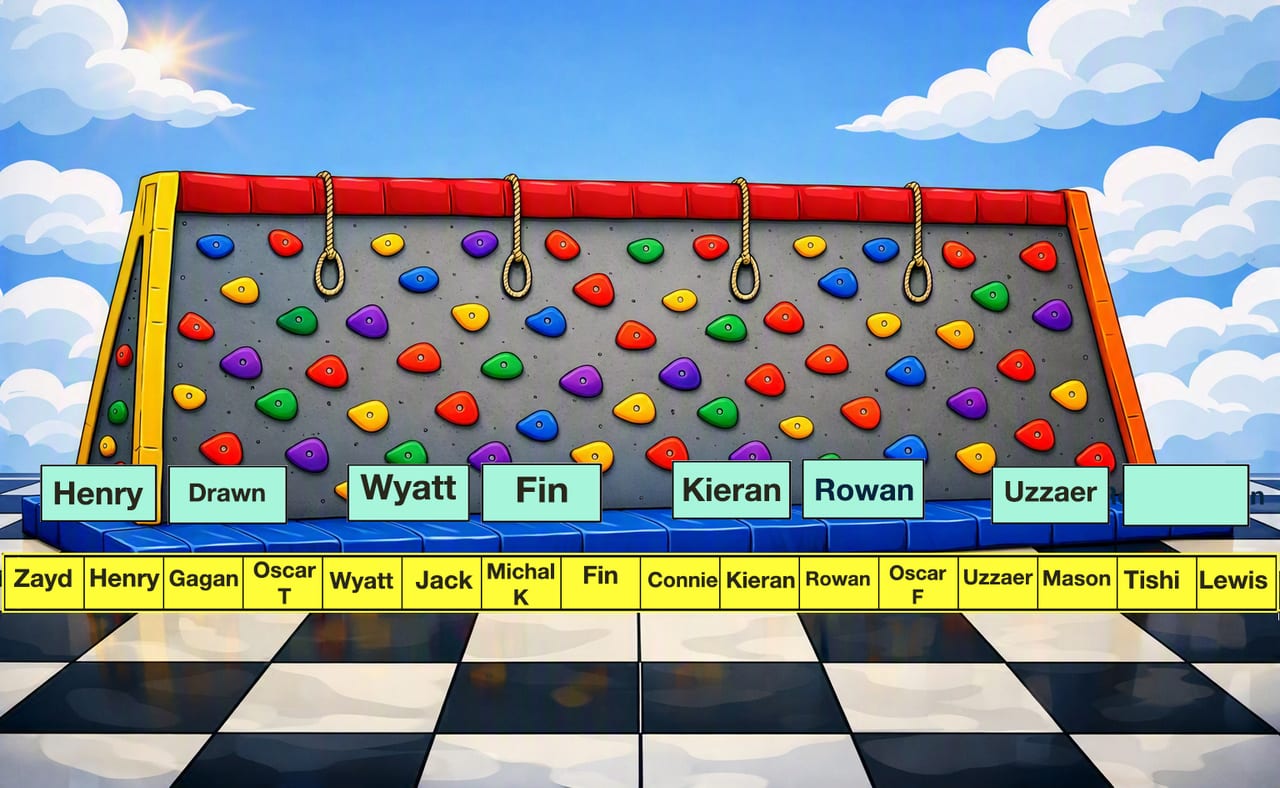
On the wall: Henry, Wyatt, Fin, Kieran, Rowan and Uzzaer are through. Gagan and Oscar T drew, so that game will be replayed, and Tishi and Lewis have still to play.
In friendly matches played there were wins for Arnav, Constance, Oscar F, Zayd, Lewis and Mason.
All Ladder results must be reported back to Graham.
We meet at Ferndown Library every Saturday, 10am–12 noon, and the club is open to 6–16 year-olds.