During this half term holiday weekend, we were delighted to host 12 enthusiastic juniors today.
A special warm welcome was extended to Arjun, a Poole Chess club ‘Baccus’ League board one player, who had an impressive and well-deserved victory this week at Poole. We were also pleased to see his younger brother Aryan joining in the fun.
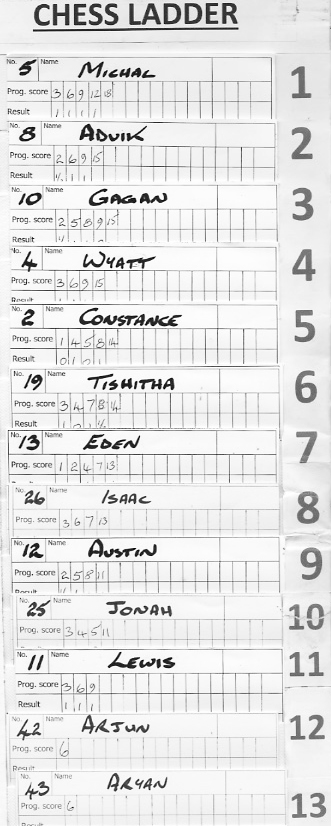
The day was filled with a lively frenzy of exciting friendly games, keeping everyone engaged and entertained. As a special bonus for this holiday weekend, every participant who attended will receive 6 points added to their total in the ladder competition, making it an even more rewarding experience for all involved. As a result no points are added for games played today.
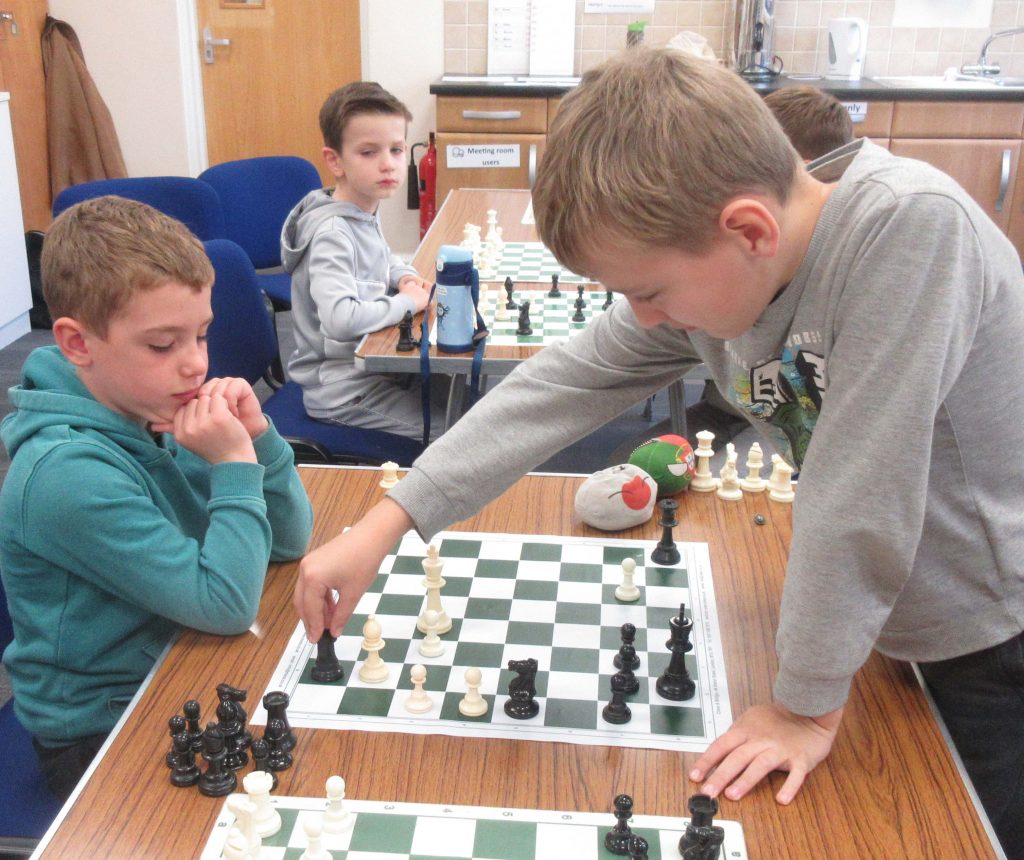
Some of the first group keeping a watchful eye on the next move by our Ladder board leader!
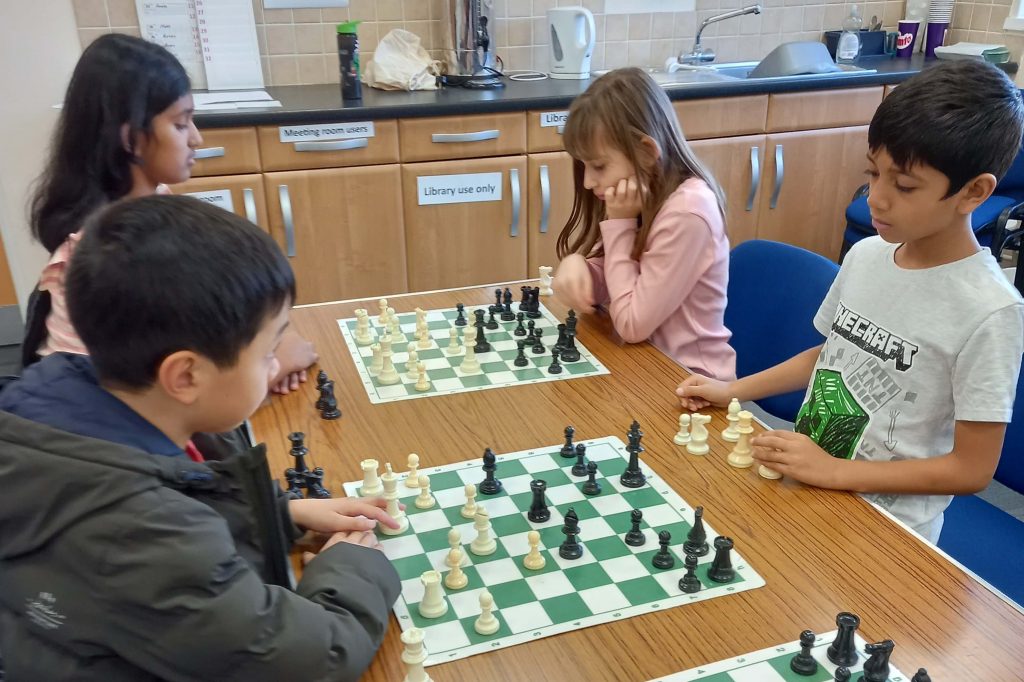
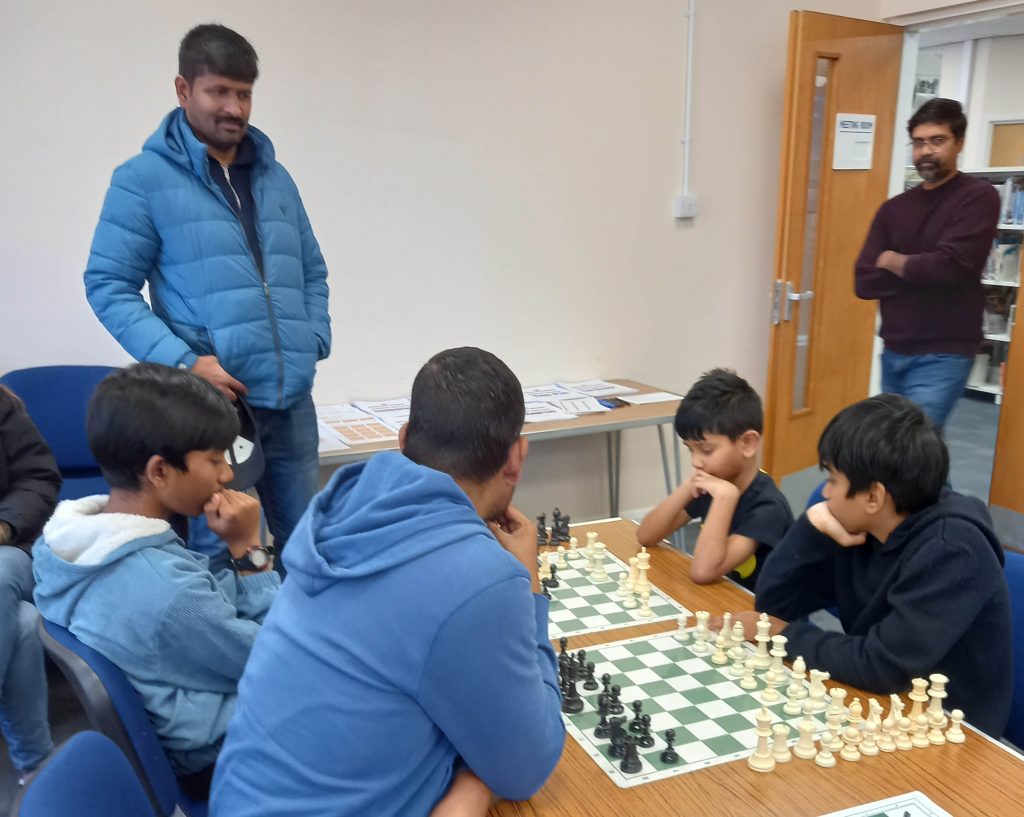
Many interested dads are quietly observing nearby, watching with curiosity and silent attention.
Theme of the day was based on ‘TacticalTargets’

Tactical targets refer to the specific weaknesses or vulnerabilities present in your opponent’s position that you strategically aim to exploit during the game. Every piece or square on the board that you can threaten or put under pressure transforms into a potential target for your tactical plans and maneuvers.
Target 1 – Undefended Pieces
Since an undefended piece can be easily threatened, it often gives the opportunity to:
- Win a tempo (gain time) by attacking it.
- Exploit the undefended piece by means of a tactical pattern.
Here’s an example:

Diagram above: Black plays 1… Qd4+, which simultaneously attacks the undefended bishop on b4 and checks the exposed white king on g1. White will be forced to get out of check, after which black will capture the undefended bishop, 2… Qxb4.
Undefended vs Hanging Pieces: These two terms are sometimes considered as synonyms but there is, technically, a difference. An undefended piece simply refers to a piece that is undefended. A hanging piece, on the other hand, is an undefended piece that is also being attacked and can be captured on the next move.
Target 2 – An Exposed King
A king becomes exposed when it’s not completely shielded by other pieces or pawns. An exposed king is obviously highly vulnerable to checks and subsequent tactical threats.

Diagram above: White advanced their f2-pawn at an earlier stage of the game. Even though it may not have been a mistake at the time, it was important for white to be aware that the missing pawn on f2 exposes their king to possible checks.
Target 3 – Important Defenders
The next diagram illustrates why a piece (or pawn) that performs an important defensive role is in itself also a target that can be exploited in tactical combinations:

Diagram above: Black plays 1… Bxc3+, removing the only defender of white’s queen. At the same time black gains a tempo by checking the exposed white king.
Target 4 – Higher-valued Pieces
Higher-valued pieces, particularly the queen and rooks, can be threatened by any piece (or pawn) that has a lower value. With regard to targets, high-valued pieces are similar to hanging pieces in the sense that lower valued pieces can attack them as if they were undefended.

Diagram above: White plays 1.Nf5! to attack the higher-valued rook on d4. The point is that white gains a tempo with this threat and on the next move they can play 2.Ne7+, forking the black king (and rook on c8).
Target 5 – Geometrically Related Pieces
The geometric relation between pieces can turn them into potential targets. Such relation generally refers to pieces (or squares) on the same rank, file, diagonal or knight-move apart. The geometric relation between pieces on the same rank, file or diagonal is usually quite obvious. However, to the untrained eye, the knight-move geometric relation isn’t obvious:

Diagram above: 1.Qh8+! Kxh8 2.Nxf7+ followed by Nxg5 demonstrates a tactical pattern based on the knight-move geometric relation between h8 and g5.
Target 6 – Pieces with Limited Mobility
In the following diagram, black’s bishop is very limited in its mobility. White finds a tactical idea to trap and win the bishop.

Diagram above: White’s move, 2.c4! wins a tempo against black’s higher-valued piece, the knight. On the next move white will use the extra tempo to play 3.c5! to trap and win the black bishop on b6.
Target 7 – Important Squares
Targets aren’t always just pieces on a board. In a variety of specific conditions, even something as fundamental as a square can transform into a target, becoming the focus of strategic moves and critical gameplay decisions:

Diagram above: White plays 1.Qe5. This move makes a threat against the undefended rook on b8, but it also makes a threat against the h8-square (Qh8#). This illustrates how even an empty square can be a tactical target.
Target 8 – Piece-Exchanges
Although an exchange (of pieces or pawns) is not a target in itself, it often is the forerunner to creating new targets in the position.

Diagram above: At a first glance the moves 1… Nxe3 2.Qxe3 appears to be a straightforward piece exchange. However, after 1… Nxe3 2.Qxe3? black can play 2… Bd4, pinning the white queen (the new target) to white’s king.
The important lesson to take away from this is that you should always take the time to carefully calculate even those piece exchanges that might initially seem pointless or insignificant. Often, these exchanges can unexpectedly uncover new targets or opportunities within the position that were not obvious at first glance. Therefore, thorough calculation in these situations is essential because it can reveal deeper strategic possibilities and help you make better decisions on the board.
Conclusion
Your understanding and knowledge of the most common tactical targets in chess play a crucial role in enhancing your overall tactical skill set. It is essential to cultivate the habit of carefully observing and identifying potential tactical targets on the board during every game. By consistently practicing this habit, you will significantly improve your ability to spot tactical opportunities that can lead to advantageous positions or even decisive moves. Developing this awareness is a key step in becoming a stronger and more strategic chess player.
Ladder Competition
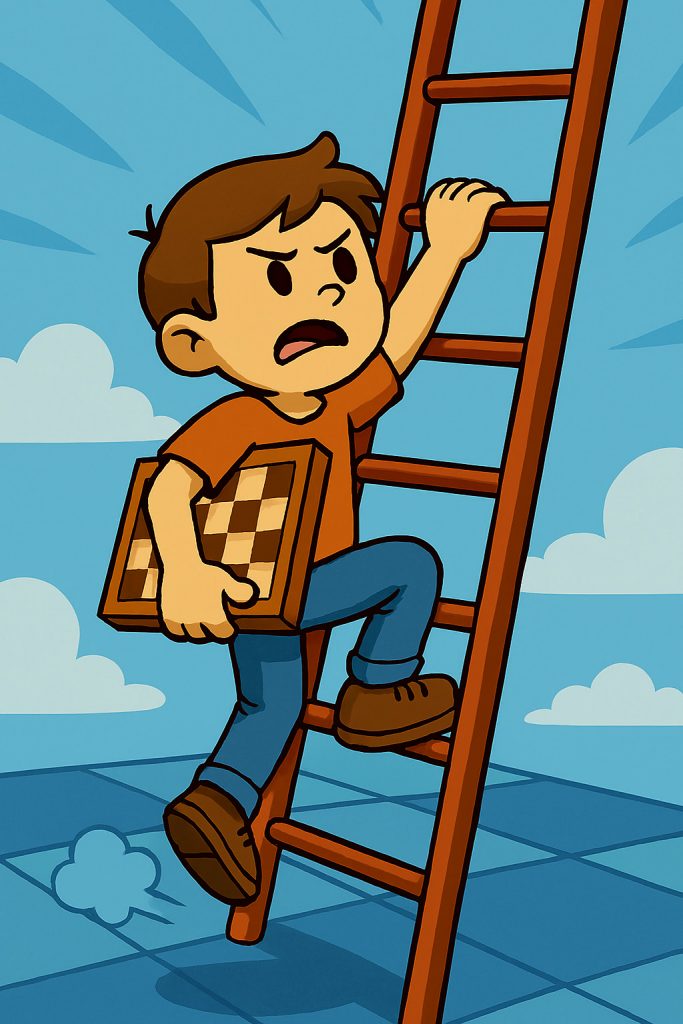
Latest top rankings for the Ladder competition following today’s bonus points awarded for attendance.
In the many friendly games played today, there were wins today for Constance, Isaac, Eden, Advik, Gagan, Jonah, Michal, Arjun, so congratulations to all.
Midweek Quiz
I am pleased to report that there has been a very positive response to the Midweek Quiz competition so far. Due to this encouraging participation, Quiz number 7 will be posted early next week. Along with the new quiz, I will also provide an updated table displaying the latest scores to keep everyone informed of the current standings.
